
Half of Commercial Honey Could Be Fake
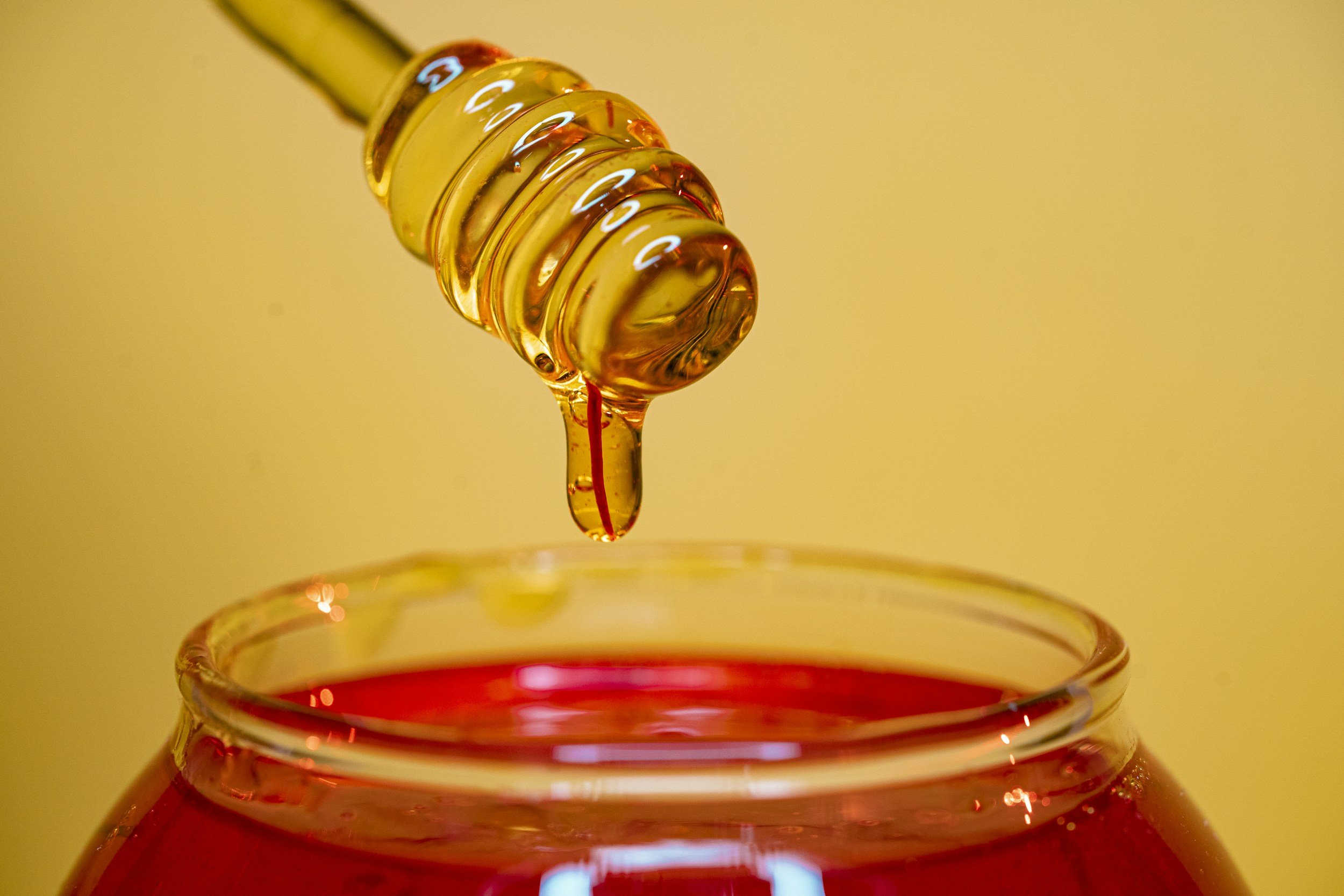
When you buy a jar of honey, you expect something simple, pure, and natural sweetness straight from the hive. But recent research shows that much of what’s sold as “honey” may not be as pure as the label suggests.
Industry experts estimate that between 30% and 70% of honey on the global market is diluted with inexpensive syrups or mislabeled to appear more natural than it really is (BeeScanning, 2023). These practices, sometimes called “honey laundering,” make it difficult for consumers to know what they’re actually buying and hurt honest beekeepers who produce genuine honey.
In the United States, the Food and Drug Administration has also taken steps to monitor honey fraud. In a recent study of imported products, the agency found that around 14% of honey samples collected in 2021-2022 showed signs of diluted honey (FDA, 2022). While that number is lower than some global estimates, it’s still a reminder that authenticity can’t always be taken for granted.
Fake honey not only misleads customers, it also undermines the hard work of beekeepers, disrupts fair pricing, and hides the true value of natural honey. Real honey is a product of place, patience, and purity qualities that can’t be faked or mass-produced.
That’s where Medora Honey stands apart. Our honey is 100% raw clover honey, harvested right here in North Dakota, America’s leading honey-producing state for more than 20 years. We never add syrups, heat, or blends, just pure, unfiltered honey from local hives.
References
BeeScanning. (2023, May 12). Know Your Honey — Learn how to identify fake honey. Retrieved from https://www.beescanning.com/know-your-honey-2/
U.S. Food and Drug Administration (FDA). (2022). FY21–22 Sample Collection and Analysis of Imported Honey for Economically Motivated Adulteration. Retrieved fromhttps://www.fda.gov/food/economically-motivated-adulteration-food-fraud/fy2122-sample-collection-and-analysis-imported-honey-economically-motivated-adulteration
