
History of Honeybees In North Dakota
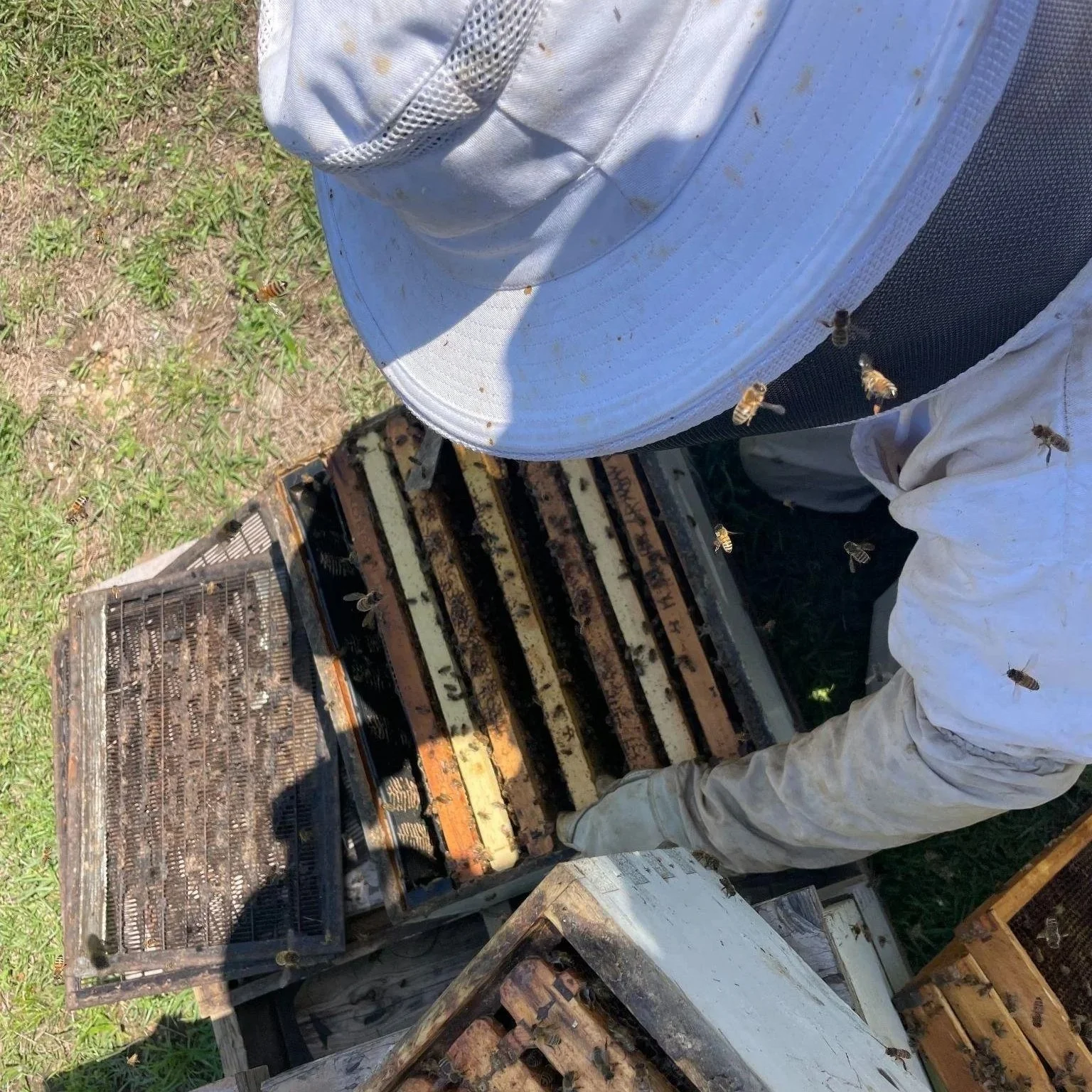
The beekeeper we source our honey from tending to the bees that produce the honey used in the delicious Medora products
Did you know that North Dakota is the biggest honey producer in the United States? Honey production in North Dakota is not a new phenomenon. North Dakota has been the #1 producer of honey for 21 years in a row. In 2024, honey producers in our state harvested over 36 million pounds of honey.
In 1622, the honey bee was brought to America by English colonizers and before the end of the century, honey production was widespread across the coast. However, it took substantially longer for beekeeping to reach the remote region of North Dakota. The state saw an increase in production in the late 1900s and early 2000s and has continued to grow ever since.
The state produces a variety of different types of honey, with clover honey being one of the most popular. Other popular honey types include alfalfa honey, canola honey, sunflower honey, and wildflower honey. The diverse types of honey produced in North Dakota are thanks to the wide array of plant life. The state has several significant pollinator-friendly plants such as prairie smoke, bee balm, and tall sedum.
Production of honey in ND has continued to grow in popularity. This is partly because the state contains an almost ideal environment for bees. The warmer summer months maintain a temperature that supports the activity of bees. Not too hot where the bees are overheating and not too cold where the bees freeze.
However, the colder months pose a challenge. The winter months are aggressively cold and can make it difficult for bees to survive and gather the resources needed. It is common for beekeepers to leave the state and take their bees to warmer states during the cold North Dakota winters.
Additionally, the vast amount of wide spaces in North Dakota support the production of honey. The open pastures and plains allow for bees to thrive. In more agrticulturally-developed areas, bees are often subjected to damage caused from farming such as destruction of their food sources and exposure to pesticides.
While North Dakota has been able to avoid most of these issues, there has been an expansion of soybean and corn farms across the state, even in areas that were saved for environmental conservation. This poses a threat for ND bee colonies. If the growth of these farms continue, they may begin to overtake many of the food and resources bees need as well as expose the bees to pesticides.
North Dakota's legacy as #1 USA honey producer is possible due to the dedication of local honey makers, bees, and the environment that supports them. By continuing to source honey in-state, consumers can help ensure that ND stays at the forefront of honey production for generations to come.
All of these factors contribute to why Medora continues to choose to source from an ethical, sustainable beekeeper here in North Dakota. The bees that produce our delicious Medora products pollinate and create their honey from the clover fields surrounding their hive in Carrington, ND.
Resources
News, DRG Media Group. “For 21st Straight Year, North Dakota Tops U.S. States in Honey Production.” DRGNews, 24 Mar. 2025, drgnews.com/2025/03/24/for-21st-straight-year-north-dakota-tops-u-s-states-in-honey-production/.
Wiki, Bees. “North Dakota Honey: How Is It Produced & Its History?” BeesWiki, 18 May 2023, beeswiki.com/north-dakota-honey/.
